Photograph(s) provided by Fukuoka City
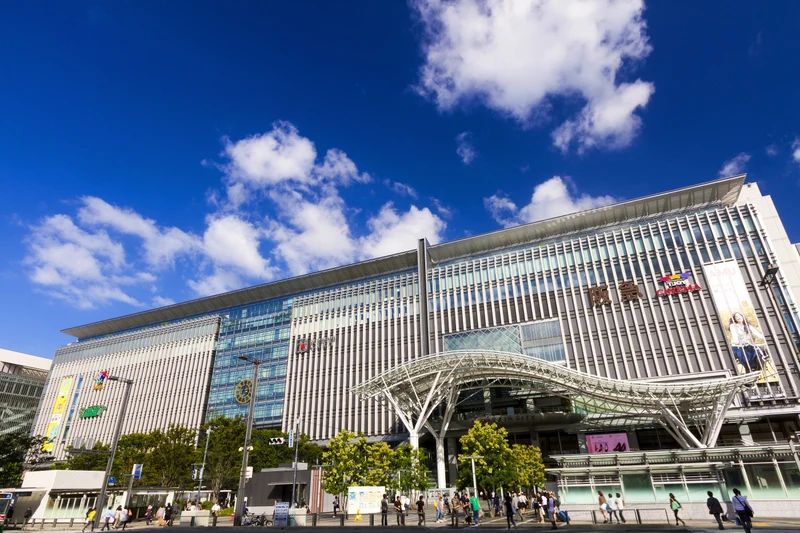
Hakata — where a Fukuoka trip begins
Hakata is Fukuoka's transport hub, where the shinkansen, JR lines and the subway meet. It's two subway stops from the airport — convenient for dropping off your bags — and the station building alone has enough shops and restaurants to fill a day.
Getting there
From Fukuoka Airport, the Airport Line subway takes about 5 minutes and costs ¥260. If you land at the international terminal, first take the free shuttle bus to the domestic terminal, then the subway. From Tenjin it's about 6 minutes by subway (¥210).
What to see
Hakata Station (JR Hakata City)
The station itself is a big shopping complex, with AMU Plaza, Hakata Hankyu and Hands under one roof. The rooftop garden, which has a small shrine, is free to visit.
Kushida Shrine
Where the Hakata Gion Yamakasa festival begins. A towering decorated festival float is on display in the grounds.
Canal City Hakata
A shopping complex with fountain shows, about 10 minutes' walk from Hakata Station.
Old Hakata
Old merchant buildings and temples remain in the streets around Kushida Shrine.
What to do
Shopping in the station
The basement food hall sells mentaiko (spicy cod roe), sweets and other gifts. There's a tax-free counter too.
Shinkansen trips
From Hakata Station you can reach Nagasaki, Kumamoto and Kagoshima (for Nagasaki, change at Takeo-Onsen). Day trips are easy.
What to eat
Hakata is the home of tonkotsu (pork-bone) ramen, and ramen shops cluster in the station basement and the Deitos area.
Mizutaki (chicken hot pot) and motsunabe (beef offal hot pot) are local dishes too, and mentaiko is a popular souvenir.
Taking a break
The station has plenty of cafés, and coin lockers on several floors. Large lockers fill up fast, so drop off big bags early.
Good to know
The station is big, with many exits. The Hakata exit (博多口) and the Chikushi exit (筑紫口) are on opposite sides, so check which one you need. The shinkansen, conventional JR lines and the subway each have their own ticket gates.